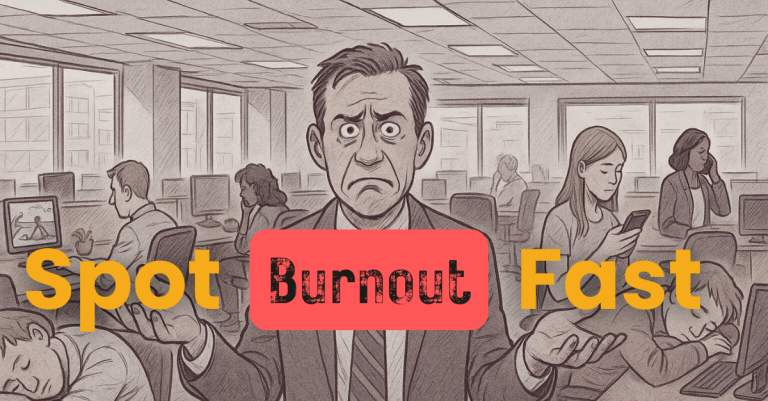

It can sneak up on anyone. But if you know what burnout feels like, you can recognize the emotional, mental, and physical signs.
Do you feel exhausted all the time at work, even when you get enough sleep? You might be on the path to burnout. Let’s examine what burnout feels like.
We’re facing an epidemic of burnout
In a 2019 study, Deloitte found that 84% of millennial workers (the largest single age group currently in the workforce) report feeling burned out at their current job. A similar Gallup study suggests that organizations with high rates of burnout experience up to 21% lower profitability and 17% lower productivity.
The World Health Organization (WHO) estimated in 2022 that $322 billion per year globally is lost in turnover and reduced productivity due to burnout.
And beyond the business costs, burnout feels awful—emotionally, physically, and mentally. On average, you will spend around 90,000 hours of your life working—that’s 13 years. That time shouldn’t be spent enduring a loathsome existence; it should mean something.
I spent 17 years working at a nonprofit I genuinely loved. I still care deeply about their mission and continue to donate to this day. But that didn’t stop me from burning out. The truth is, I didn’t even realize I was burned out, not until after I left. Only when I had some distance could I clearly see what I had gone through. I’ve recovered, but I want to ensure you recognize the signs before burnout sneaks up like it did on me.
As with most problems, the first step to recovery is clearly identifying the problem. Let’s break down the signs and symptoms of burnout.
Here’s what burnout feels like
The American Psychological Association describes burnout as “a psychological syndrome and occupational phenomenon” arising from chronic stress. The warning signs cut across four key categories: emotional, cognitive, behavioural and physical.
Emotional Signs
As I mentioned at the start, feeling tired all the time is a significant indicator. But a sense of growing cynicism or negativity about your work is another sign, as is feeling detached or emotionally numb, like you’re going through the motions but feel no joy or engagement.
Cognitive Signs
People experiencing burnout note difficulty concentrating, forgetfulness or “brain fog.” They’re also likely to be more indecisive. Research confirms that chronic stress, which causes burnout, can impair memory, attention, and decision-making. If you have trouble focusing on tasks or finishing your work, these may also be red flags.
Behavioural Signs
There’s a common misconception that burned-out employees are just lazy. This comes from these signs. Burnout increases tendencies for procrastination, lateness and absenteeism. Burned-out employees are also often seen as antisocial, but burnout is known to promote “social withdrawal,” where employees become less communicative or engaged. Low morale and declining work quality are additional signs.
Physical Signs
Burnout is often associated with sleep disturbances like insomnia or oversleeping, which don’t help with the feelings of exhaustion. Frequent headaches, stomach troubles and muscle tension have also been associated with burnout. As are strange aches or pains, or a weakened immune system.
If you notice an ongoing overlap of any of these symptoms, you may be experiencing burnout, and it might be time to speak with a medical professional, your employer, or a coach or mentor. Identifying the problem is the first step, and building a support network is the next step.
In this next post, I break down how to spot burnout in your team members — even when they don’t see it themselves. After that, we’ll dive into practical strategies for recovering from burnout and explore the cultural shifts that help prevent it in the first place.